
If people in your organisation frequently use the BCC function to send emails en masse to external recipients, they may unwittingly also cause your domain reputation damage. Email servers and service providers like Microsoft 365 or Google Workspace have filters looking for long BCC tails.
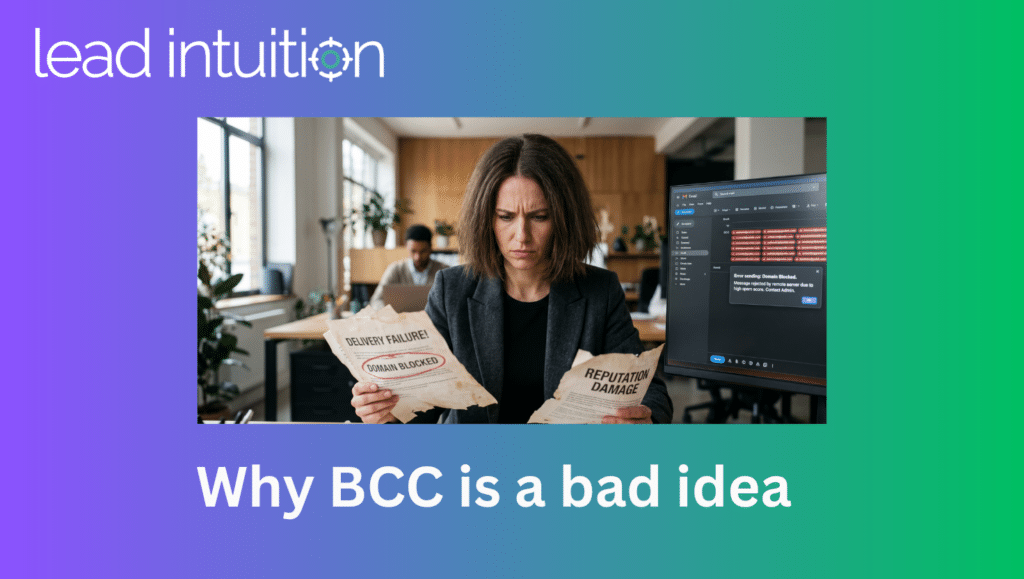
It’s not just your marketing emails + the health of your mailing lists that can do damage. Using BCC to send multiple emails can do that too!
BCC is good for some things
BCC (Blind Carbon Copy), the ability to send an email to someone without their email address appearing in the header, has its uses:-
- It’s a great way to keep your boss in the loop, without others seeing that you’ve done it. Internal emails are safe for BCC.
- It’s a great way to protect recipients from exposing their email addresses to one another.
Unfortunately though, it’s also a great and well known way to send spam!
BCC is not a good bulk email substitute
Sure, sending the same email to some 20+ recipients using BCC is a lot easier than sending 20+ one-by-one. Its quick and easy.
The problem is, spammers do this too! As a result, long BCC lines, or the same message going to multiple BCC’d recipients on the same destination service provider are a couple of the many factors considered when judging whether or not your email is likely to be spam.
People can not unsubscribe from a BCC email. All they can do if your BCC messages is regarded by them as unwanted, is to delete it or mark you as spam. Email service providers are now acting upon their user behaviours/feedback. If they see a pattern of your domain regularly being marked as spam, or deleting without opening, they will deliver your future messages into the recipients spam/junk folder.
If people have unsubscribed from your marketing emails, they have done so for a reason which we must respect. When you subsequently send a BCC message that looks like a marketing message and they have previously unsubscribed, you run a higher risk of being reported as spam.
Make a Mistake and Send as CC – There are numerous instances of people accidentally sending emails using CC, when they meant to use BCC – Basically exposing all the emails and potentially names of the people you CC’d. This can cause you to come to the attention of regulatory authorities (Like the ICO in the UK) and even though its an innocent mistake, you will have potentially disclosed personal information and find yourself on the wrong end of an PECR investigation and even a fine.
Undisclosed Recipient lists (Another way of sending emails en masse) are also common inbox filters these days and can have the same negative effect on your domain reputation.
The BCC Solution
Discourage the regular use of BCC for sending to multiple email addresses in your organisation. Every email sent from your domain can impact your Domain Reputation. All employees, not just the marketing department, have a responsibility here. That’s why using a bulk email sender like ActiveDEMAND is more important today than ever before when sending bulk emails.
If your organisation sends a lot of messages, consider creating a Preference Page where people can select which messages they want to receive from you (Granular unsubscribe) rather than only unsubscribe from everything.
If you have any questions about domain reputation, deliverability or email list health, just send us an email to hello@leadintuition.co.uk schedule a call with us